
LNHS Activities
The LNHS Library, located in the Angela Marmont Centre, Natural History Museum, is open every Wednesday and every third Saturday of the month. Please see the Library page for more information, and our calendar for ID seminars and other events held at the library. See you there!
We have a full programme of activities, both in person field meetings and virtual talks. Please check the calendar and our downloadable programme for full details. Please note that these events may be cancelled at short notice.
Virtual Talks

The LNHS Virtual Natural History Talk series brings together naturalists with experts and specialists using the Zoom videoconferencing tool.
Our talks are hosted fortnightly and are free to attend (though booking is required).
The talks cover a wide range of subjects, from birds to bats, worms to weeds, fungi to foxes and everything inbetween.
Talks are around 30-40 minutes in length and are followed by a live Q&A between the guest speaker and audience.
Find out more about the Virtual Talks
News
Butterflies of London
The LNHS is very pleased to announce the publication of The Butterflies of London by Leslie Williams. For more information on this publication, please read more...
Digital option for the newsletter
If you would like to be sent a digital copy of our Newsletter instead of receiving a paper copy by post, please This email address is being protected from spambots. You need JavaScript enabled to view it..
Volunteering
The LNHS is run by active and engaged volunteers. Getting involved in the LNHS is a great way to make a difference, meet new people, learn new skills and learn about the wildlife and natural history of London. We have a number of volunteer positions, including recorders, writers, and more. Please see our Volunteering pages for more info or download our handy leaflet for the latest opportunities.
The LNHS News section is the place to keep up-to-date with society announcements and project updates. We accept blogs from naturalists and biodiversity-sector organisations that want to share their experiences and opportunities with our members. Please contact the This email address is being protected from spambots. You need JavaScript enabled to view it. if you'd like to contribute articles.
Membership
London's biodiversity faces new challenges from climate change and development pressure.
You can contribute to the conservation of wildlife in the London area by helping to record the changing fortunes of the many species that live here.
Together with our historic records, this information will help us to tackle the conservation issues of the future.
Join us, learn new skills, and help us to make a difference.
Sign up to the LNHS now
 Since the beginning of the 20th century, 360 species of birds have been recorded across the London Natural History Society recording area.
London is surprisingly good for bird life due to a rich variety of habitats which include woodland, grassland, farmland, lakes, rivers, reservoirs, estuaries and mudflats. It also has over a hundred nature reserves and open spaces, ranging from tiny local nature reserves to large expanses such as Hampstead Heath, Epping Forest, and world-class man-made nature reserves such as the London Wetland Centre.
London is also home to a high density of expert birdwatchers who are quick to find special birds and disseminate the news on social media.
The intense gaze of watchers, combined with good management of spaces for nature, results in London recording around 200 species a year. This includes residents, summer visitors, birds on spring and autumn passage, and the occasional vagrant.
Almost every regularly-occurring bird family in the British isles is recorded in London, from the ocean-going skuas to the canopy loving leaf warblers. This makes London a good place for birdwatchers to hone their craft. The London Bird Club’s activities range from the recording of birds to guided nature walks suitable for beginners.
What does the London Bird Club section cover?
 In a nutshell, the LBC covers the recording of all birds across the LNHS recording area. The geographical area that we cover is divided into seven bird recording areas (Inner London rectangle plus 'vice counties' - the boundaries of the vice counties are more or less based on the original county boundaries):
-
Inner London
-
Buckinghamshire
-
Essex
-
Hertfordshire
-
Kent
-
Middlesex
-
Surrey
In addition to general recording, the LNHS is also actively involved in undertaking Breeding Bird Surveys across London on behalf of the British Trust for Ornithology (BTO).
For more information about recording birds and submitting records, check out our Recording Birds page.
London Bird Club section events

LBC events are open to all, including both LNHS members and non-members. Click here for the LNHS event programme.
Birdwatching Walks are field meetings that are a brilliant way to get outdoors in the company of like-minded wildlife enthusiasts and to discover some of London’s great locations for wildlife. The walks are led by leaders who are often interested in not just the birds but the other popular groups such as butterflies, dragonflies and plants as well.
The walks are also a good way for upskilling and developing naturalist skills for people who want to develop careers in research and conservation. They are open to both LNHS members and non-members alike - all are welcome!
London Bird Club Talks are 'indoor meetings' that cover a wide variety of topics, including bird identification, historical reviews of sites, and reports of foreign trips.
They include the section AGM, talks held at Burgh House (Hampstead) and joint talks with the Marylebone Birdwatching Society (held at Gospel Oak Methodist Church).
How to get involved
Aside from attending our events, there are a number of ways that you get involved with the London Bird Club…
Bird Recording is at the core of the LBC and our Society Recorders are always happy to receive records of your species observations within the LNHS Recording Area.
- Check out our recorder resources and how to submit your bird records on our Recording Birds page.
We also organise an Ornithological Reading Circle that circulates a series of magazines to members at reduced subscriptions.
- For more information, check out the Library page.
Social media is a great way of communicating with the London Bird Club and keeping up with the latest London Bird Club news:
-
Follow London Bird Club on Twitter: @LondonBirdClub
-
Share your bird observations on Twitter with #londonbirds
- Follow London Bird Club on Instagram: @londonbirdclub
Joining one of the London Bird Club committees is a great way to put your existing skills to good use or even develop new ones. Each committee member has a specific role and we are always on the lookout for more helpers with organising events, managing social media and producing content for the London Bird Report.
London Bird Club section projects
The London Bird Club section also undertakes projects related to the natural history of London, such as distribution atlases to assess the state of a given species group. The London Bird Report is an annual, ornithological publication that has been published by the LNHS since 1937. It counts amongst its editorial team some of the best-known names in London and the home counties as well as people who are personalities on the wider British scene. The authoritative publication brings together the efforts of professional ornithologists and casual bird watchers to produce an annual distillation of bird records in the recording area of the London Natural History Society (a 20-mile radius of St Pauls Cathedral). Records of rare and unusual species in the London Area are considered by our Rarities Committee before being included in the London Bird Report.
- For more info check out the London Bird Report page
- For details about contributing to the London Bird Report check out the Volunteering section of our website
The London bird records are being transformed from historic paper cards to an accessible digital dataset through our Historic Bird Record Digitisation Projects. Working with Greenspace Information for Greater London CIC (GiGL), we have launched 2 projects to enable volunteers to help us bring these records into the 21st Century. The projects don't require any specific bird knowledge and involve transcribing the historic cards.
- Find out more, including how you can get involved, via the Digitising Historic Bird Records page
 The London Bird Atlas was published in 2017, and builds on the work of two previous atlases produced by the Society (covering the periods 1968-72 & 1988-94). This latest atlas profiles 200 of the most common bird species found within London, from mute swans to house sparrows. Each entry is illustrated with colour photographs and a map showing distribution. The text also describes the capital’s varied habitats, including brownfield sites, woodland and wetlands, and contains a gazetteer of sites.
- For more info check out the London Bird Atlas page
Below is a full list of the current Society officers and Recorders of the London Natural History Society. For details of how to contact the Society, please see our Contact Us page.
President and Honorary Vice-Presidents
President: Tony Madgwick
Honorary Vice-Presidents: Anthony J. Barrett; John A. Edgington PhD, FLS; Jan F. Hewlett PhD; Helen Baker MBOU; R. John Swindells; Colin W Plant BSc; Mike West; Keith Betton MBOU; and Michael Wilsdon MBOU
Council
The affairs of the Society are managed by Council, whose members are the President, Secretary and Treasurer, one representative from each section and ten elected representatives of members.
Society Officers
Vice-Presidents: Mark Burgess; MBOU; Edward Tuddenham MD; and Maria Roberts
Secretary: Annie Wilson
Treasurer: James Lovely, PhD
Assistant Treasurer (Membership): Robin Blades
Section Representatives of Council: Kennedy Cruickshank (London Bird Club), Mark Spencer (Botany), Leslie Williams (Ecology & Entomology), Pete Mantle (Bookham Common Survey), Joanne Maddox (Hampstead Heath Survey)
Elected Member Representatives of Council: Robin Blades, Noel Brock, Liz Andrew and Kat Duke
Administration and Finance Committee
- Chair: Vacant
- Secretary: Jo Hatton
- Members: Tony Madgwick (President), Annie Wilson (LNHS Secretary), James Lovely (LNHS Treasurer), Robin Blades, Mark Burgess, Kennedy Cruickshank, Michael West, Mike Coleman (Publications) and Molly Thomas
Independent Examiner: Hentons
Conservation Officer: Elliot Newton
Library & Publications

Librarian: Leslie Bolsover
Library Committee
- Chair: Vacant
- Secretary: Andrew Planet
- Members: John Boorman (LBC), Tristan Bantock (E&E), Andrew Planet (Botany), Leslie Bolsover (Librarian), James Lovely (LNHS Treasurer & Library Assistant) and Ron Dionne (Library Assistant)
Publication Sales: Mike Coleman
Editor, The London Naturalist: Clive Herbert
Editor, Newsletter: Mark Burgess
Programme coordinator: Noel Brock
London Bird Report Editorial Board
Chair of Editorial Board: VACANT
Data Manager: Roger Payne
Editors, Birds of the London Area: Derek Coleman, Sally MIddleton, Ian Woodward, Ben Hillier and Alex Massey
Editor, Papers: Iona Cunningham-Eurich
Editor, Photographs: Anke Marsh
Editors, Remaining Sections: Pete Lambert and Mike Trier
Production Manager: Gus Wilson
Secretary of the LBR Editorial Board: Annie Wilson
Graphics and Review of the Year editor: Nigel Hawtin
Other members: Bob Watts
Designers: Nigel Partridge and Mike Trier
Rarities Committee: see London Bird Club section below
Bird Recorders: see London Bird Club section below
London Bird Club
Chair: Gehan de Silva Wijeyeratne FLS
Committee Secretary: Şeniz Mustafa
Talks Organiser: Vacant (Contact chair)
Field Meetings Organiser: Cathy Ching
Chair of London Bird Report Editorial Board: See London Bird Report Editorial Board above
Reading Circle Secretary: Angela Linnell
Ringing enquiries: Daniel Whitelegg and Paul Roper
BTO North London Contact: Ben Hillier
BTO South London Contact: Richard Arnold
Committee: Sally Middleton and John Boorman
Rarities Committee
- Chair: Bob Watts
- Committee: John Archer, Richard Bonser, Rob Innes and Andrew Self
Recorders
- London Recorder: Roger Payne
- Buckinghamshire: Vacant
- Essex: Roy Woodward
- Hertfordshire: Roger Payne
- Inner London: Richard Bonser
- Kent: John Archer
- Middlesex: Henry Wyn-Jones
- Surrey: Paul Goodman
Botany

Committee meetings chair: Mark Spencer
Secretary: Andrew Planet
Field Meetings Secretary: Jon Agar
Indoor Meetings Secretary: Saba Rokni
Committee: Andy Overall, John Skinner, Peter Howarth, Paul Bartlett PhD, Robin Blades, Annie Chipchase, Ian Kitching, Wendy Knowles, Mario Maculan, Maureen Parry, George Hounsome and John Swindells
Recorders:
- Flowering Plants: Mark Spencer PhD FLS and Henry Miller
- Vascular Cryptogams (Ferns & Allies): Mark Spencer PhD FLS and Henry Miller
- Fungi: Andy Overall
- Lichens: John Skinner
- Bryophytes (Mosses & Liverworts): Peter Howarth
Ecology & Entomology

Chair: Keiron Derek Brown
Secretary: Nathalie Mahieu PhD
Field Meetings Secretary: Cassandra Li
Treasurer: David Greeno
Committee: Mick Massie, Stephanie Skipp and Anke Marsh
Recorders:
- Mammals: Clive Herbert FLS
- Reptiles and Amphibians: Tom Langton BSc
- Fish: Johnnie Johnson
- Araneae (Spiders): J. Edward Milner BSc
- Coleoptera - Cantharidae (Soldier Beetles & Allies): Stephanie Skipp
- Coleoptera - Chrysomelidae (Leaf Beetles): Michael Geiser
- Hemiptera (True Bugs): Tristan Bantock
- Hymenoptera (Ants): Mike Fox
- Hymenoptera (Bees & Wasps): Tony Madgwick
- Diptera (True Flies): Linda Pryke
- Lepidoptera - Butterflies: Leslie Williams
- Lepidoptera - Moths: Colin W. Plant BSc
- Neuroptera (Lacewings & Allies): Colin W. Plant BSc
- Orthoptera (Grasshoppers & Crickets): Sarah Barnes
- Odonata (Dragonflies & Damselflies): Neil Anderson BSc
- Oligochaeta - Earthworms: Keiron Derek Brown
- Molluscs: Nina Hundt
- Plant Galls: Tommy Root
Bookham Common Survey
Representative: Peter Mantle
Hampstead Heath Survey

Chair: Liz Andrew
Secretary: Jeff Waage
Committee: Prof. Jeff Duckett, Kat Duke, Jo Maddox, Pete Mantle, Monica Dawes, Noel Brock, Clive Herbert and Katie Hanlon
Virtual Talks
Committee: Maria Roberts, Anke Marsh and Tony Madgwick
Website and Social Media management
Facebook forum: Andrew Planet and Keiron Derek Brown
Instagram: Cecilia Derrick and Jo Maddox
Bluesky: Pete Mantle and Anke Marsh
Web manager: Anke Marsh
Content editors: Anke Marsh and Keiron Derek Brown
All records of ornithological interest, from London Natural History Society (LNHS) members and non-members alike, are welcomed by the London Bird Club (LBC) especially records of breeding, even of common, species. The records are used to compile the annual London Bird Report.
Sensitive records can be sent direct to one of the LNHS bird recorders and will be treated in confidence.
The LNHS records a wide variety of flora, fauna and fungi, so for advice on recording other organisms please see our Biological Recording page.
To ensure that your bird records make their way to the LNHS, please use the preferred or alternative submission methods listed below. Please note that bird records submitted through other systems may not be shared with the LBC.
Guidance for Bird Recorders
Every year, a significant amount of time is spent by the volunteers working on the LBC’s Rarities Committee and the London Bird Report. It will help us a lot if you can remember the following.
- Use your actual observer name (not a social media handle or alias, however well-known your ‘brand name’ is).
- Ensure we can contact you by email. (If you registered to a records portal, the email is available.)
- Use standard names in the Gazetteer of Sites used by the LBC (see locality information section below).
- Note the helpful information in the section below on details to provide and information on sensitive records.
 LNHS Recording Area
The geographical area that we cover is divided into seven bird recording areas (Inner London rectangle plus 'vice counties' - the boundaries of the vice counties are more or less based on the original county boundaries). 'Inner London' consists of a rectangle based on Charing Cross (click on the map on the right for more info). See our Biological Recording page for more details.
Locality Information
Site names, including the names of towns, villages, open spaces, etc., are listed in our Gazetteer of Sites (see below). Please use these site names, when sending in records. If you need to send in details from a site that is not listed in the Gazetteer, please give an OS Grid Reference and relevant background information about the site.
Species Checklists
The Checklist Guide Breeding Criteria and Checklist Guide Spreadsheet contain the checklist of birds of the London Area and a guide for contributors of ornithological records. Breeding criteria are included on page 11 of the PDF file. This guide is not intended to be comprehensive, and contributors are asked to use their own guidance and common sense, but it does serve as a reference point for the type of records required.
- Download the Checklist Guide Breeding Criteria
- Download the Checklist Guide Breeding Criteria Spreadsheet
Rarities
Please download the form for submitting Details of an Unusual Record Form. This form can be completed online, for which you will need Adobe Acrobat Reader DC, or an equivalent program; alternatively you can print the form and complete it manually. In either case, please send it to the Chair of the Rarities Committee as an email attachment or by post as soon as possible (see the London Bird Club section of the Contact Us page for details). See also the LBC Rarities Checklist of Description Species.
Surveys
Volunteers are always wanted for the BTO/JNCC/RSPB Breeding Bird Survey (BBS).
Preferred Submission Method: Going Birding Records Portal
Our preference is that you use the online recording facilities provided for the club by Going Birding.
You can view the latest sightings here and use the links on that page to sign up so that you can submit your records:
- London Bird Club Twitter (@LondonBirdClub)
- This email address is being protected from spambots. You need JavaScript enabled to view it.
Alternative Submission Methods
 Although the Going Birding Records portal is our preferred submission pathway, we can also receive records through the following alternative submission methods.
BirdTrack
We can take records from the British Trust for Ornithology (BTO) BirdTrack system, but please use the site names, listed in our Gazetteer of Sites (see locality information section above).
Please note that BirdTrack may not make your records available to LNHS automatically. You need to log in to BirdTrack and check the option ‘My details & settings’. At the bottom of that page, if it says ‘You have asked us not to forward your records to local bird recorders’, then we will not be able to obtain your records. You cannot alter this setting directly. You need to email BirdTrack and ask them to change this.
eBird
We can take records from eBird. Their London hotspots are derived from the sites in our Gazetteer of Sites (see locality information section above). Please use these for the localities of your records.
Direct to LNHS Recorder
Please download the Bird Recording Form and use this Excel spreadsheet to compile your records. The Gazetteer of Sites and the Checklist, Guide and Breeding Criteria are also included as sheets in the Bird Recording Form. The completed spreadsheet should then be sent to the relevant LNHS bird recorder (see the London Bird Club section of the Contact Us page for details).
London Bird Club Wiki
You can enter records onto the LBC Wiki. If you do use the Wiki, please send your email address to the LBC Data Manager (see the London Bird Club section of the Contact Us page for details), so that we can contact you to resolve any problems. Also please use the suggested format, and the site names in our Gazetteer of Sites (see locality information section above).
If you choose to enter records in more than one way, please let the LBC Data Manager know which one we should take as your “master list”, so that we can avoid storing duplicates. (see the London Bird Club section of the Contact Us page for details).
Data Protection
Your records may include personal data as they show where you were on a particular date. The LNHS’s Privacy Notice explains how and why we use people’s personal data and your rights in relation to that data. It explains that records may be passed on to other organisations in order to further our natural history and conservation objects. Please read the Privacy Notice before submitting records to us.
The Story of the Cockney Sparrow
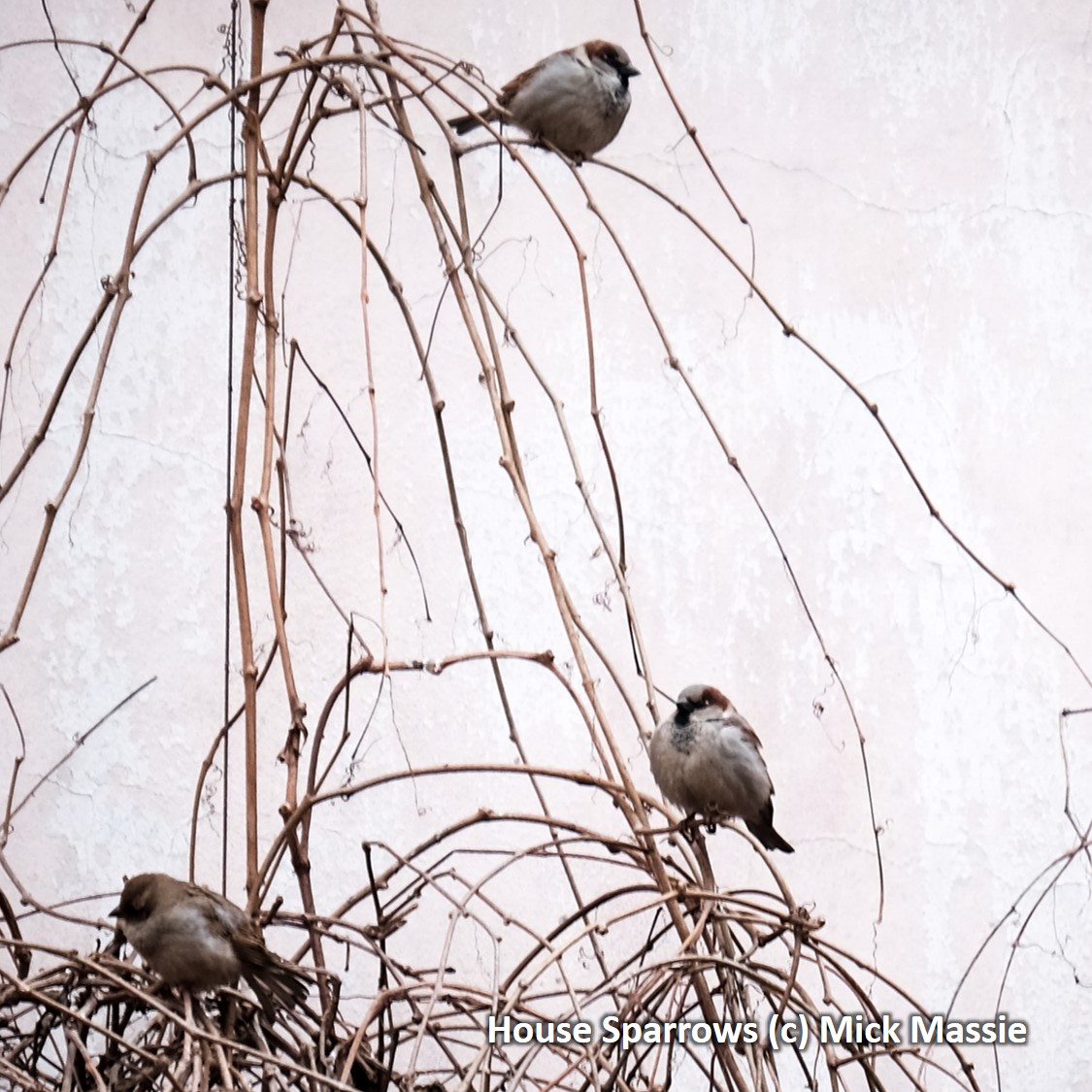
Once upon a time the House Sparrow was so common in London that it was chosen for the logo of our Society, as the most typical London bird that everyone would be familiar with. Then suddenly, a few year ago, it seemed to have gone from most of London's streets and gardens.
In fact recent House Sparrow surveys and research in London carried out by LNHS, the British Trust for Ornithology (BTO), and the RSPB have provided up-to-date distribution data and shown that there are patches where they still seem to be doing well, but distribution is fragmented, and in much of central London they have virtually gone. In 1925, 2,600 were counted in Kensington Gardens; in 2001 just 8!
This story illustrates the importance of keeping species records - otherwise significant changes in abundance or distribution patterns would be missed - and it shows that common species need to be recorded as much as rare ones. Keeping species records is one of the fundamental principles of ecology and conservation. Without data on how a species is doing and where it is distributed, we cannot plan how to conserve it.
What is biological recording?
Biological recording is the scientific study of the distribution of living organisms, biological records describe the presence, abundance, associations and changes, both in time and space, of wildlife.
Click here to visit www.biologicalrecording.co.uk to learn more
Recording in London
During its long history, members of the Society have recorded the effect upon our region's wildlife of the huge urban expansion of London, which initially led to habitat loss and severe air pollution. From the 1950s onwards clean air legislation brought respite from pollution, but London's wildlife faced new challenges, especially in the periphery of our area, from the intensification of agriculture, and the introduction of toxic pesticides.
We now see new changes in the diversity and distribution of wild species at the same time as a changing climate. But are all these changes in wild populations really caused by climate change? There can be many reasons why a species expands its range, or increases or declines in numbers. Answering questions like this is one reason why the on-going collection of species records is more important than ever.
Mapping distribution
In recent decades the Society has published a number of distribution atlases, partly based on records compiled by members. These were major publications that give us important baseline data against which to monitor future changes in species distribution.
Anyone can submit biological records - you don't need to be a scientist or an ecological consultant (you just need to be confident that you have the skills to identify the species that you are recording). In fact, it is volunteers and amateur naturalists that contribute the vast majority of species occurrence records to UK biodiversity databases.
Here at the LNHS, we support local recorders to find, identify and record a wide variety of species across the LNHS recording area, whic is a 20 mile, or 32 km, radius centred on St. Paul's Cathedral in central London.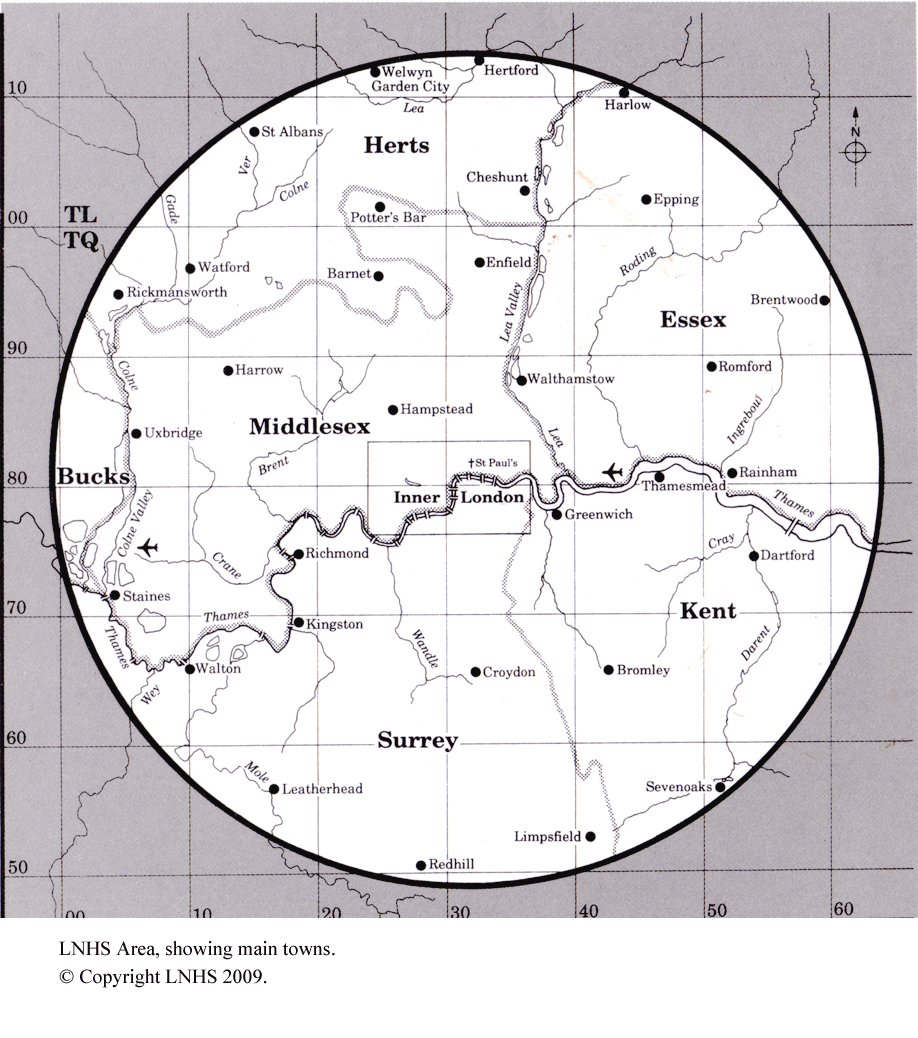 We've created three maps of the LNHS Recording Area to assist London recorders. Clicking the hyperlinked map titles below will open the map in a new browser window; to return to this page, close the window. All maps are printable.
We support recording in London through a range of events and recording initiatives, with designated recorders for a wide range of species groups.
Our designated recorders are always happy to receive biological records and offer guidance to new and existing recorders.
Contact details for Recorders can be found on the Contact Us page,
How do I submit records to the LNHS?
The preferred submission record varies by taxonomic group (as does the type of additional information collected alongside the who, what, where and when). If you are recording a specific group, please see the recommendations provided by the designated LNHS recorder below:
London Bird Club Section
- Birds: See our Recording Birds page for details of the various LNHS-approved submission pathways
Botany Section
- Vascular Plants: Contact the LNHS Recorder for guidance (see the Contact Us page for details)
- Vascular Cyptograms (Ferns & Allies): Contact the LNHS Recorder for guidance (see the Contact Us page for details)
- Bryophytes (Mosses & Liverworts): Contact the LNHS Recorder for guidance (see the Contact Us page for details)
- Lichens: Contact the LNHS Recorder for guidance (see the Contact Us page for details)
- Fungi: Contact the LNHS Recorder for guidance (see the Contact Us page for details)
Ecology & Entomology Section
- Mammals: Contact the LNHS Recorder for guidance (see the Contact Us page for details)
- Reptiles & Amphibians: Contact the LNHS Recorder for guidance (see the Contact Us page for details)
- Fish: Submit the records through the LNHS iRecord activity
- Isopoda - Woodlice: Submit the records through the LNHS iRecord activity
- Diplopoda - Millipedes: Submit the records through the LNHS iRecord activity
- Chilopoda - Centipedes: Submit the records through the LNHS iRecord activity
- Arachnida - Harvestmen & False Scorpions: Contact the LNHS Recorder for guidance (see the Contact Us page for details)
- Arachnida - Spiders: Contact the LNHS Recorder for guidance (see the Contact Us page for details)
- Lepidoptera - Butterflies: Complete the Butterfly Recording Spreadsheet and email to the LNHS Recorder (see the Contact Us page for details)
- Lepidoptera - Moths: Complete the Moth Recording Spreadsheet and email to the LNHS Recorder (see the Contact Us page for details)
- Odonata - Dragonflies & Damselflies: Contact the LNHS Recorder for guidance (see the Contact Us page for details)
- Neuroptera - Lacewings & Allies: Contact the LNHS Recorder for guidance (see the Contact Us page for details)
- Riverflies - Caddis Flies, Mayflies and Stoneflies: Submit the records through the LNHS iRecord activity
- Orthoptera - Grasshoppers & Crickets: Submit the records through the LNHS iRecord activity
- Hymenoptera - Bees and Wasps: Submit the records through the LNHS iRecord activity
- Hymenoptera - Ants: Submit the records through the LNHS iRecord activity
- Coleoptera - Ground Beetles & Ladybirds (Carabidae & Coccinellidae): Contact the LNHS Recorder for guidance (see the Contact Us page for details)
- Coleoptera - Leaf Beetles (Chysomelidae): Submit the records through the LNHS iRecord activity
- Coleoptera - Soldier Beetles & Allies (Cantharidae): Submit the records through the LNHS iRecord activity
- Coleoptera - All other beetles: Submit the records through the LNHS iRecord activity
- Diptera - True Flies: Submit the records through the LNHS iRecord activity
- Hemiptera - True Bugs: Submit the records through the LNHS iRecord activity
- Oligochaeta - Earthworms: Submit the records through the LNHS iRecord activity
- Mollusca - Slugs & Snails: Submit the records through the LNHS iRecord activity
- Plant Galls: Contact the LNHS Recorder for guidance (see the Contact Us page for details)
- Any other invertebrate groups: Submit the records through the LNHS iRecord activity
For casual records, we recommend the following:
-
Birds: See our Recording Birds page for details of the various LNHS-approved submission pathways
-
All other groups: Submit the records through the LNHS iRecord activity and they will be passed on to the relevant recorder
Data Protection
Your records may include personal data as they show where you were on a particular date. The LNHS’s Privacy Notice explains how and why we use people’s personal data and your rights in relation to that data. It explains that records may be passed on to other organisations in order to further our natural history and conservation objects. Please read the Privacy Notice before submitting records to us.
The London Natural History Society (or LNHS as it is commonly known) is a local natural history society within the UK concerned with recording the wildlife of London, covering a circular area covering a 20-mile radius from St. Paul's Cathedral. The society aims include to foster the appreciation and study of London's wildlife and natural environment and assisting in the conservation of wildlife in the London area by helping to record London's wildlife. Society activities include running both indoor and outdoor events throughout the year and producing a number of publications, including the annual London Naturalist and London Bird Report. The LNHS library is housed at the Natural History Museum, London.
Society aims

- to foster the appreciation and study of London's wildlife and natural environment. We strive to achieve this aim by engaging and informing both members and public alike with a variety of activities and resources.
- to assist in the conservation of wildlife in the London area by helping to record the changing fortunes of the many species that live here. Together with our historic records, this information will help us to tackle the conservation issues of the future.
- to help our members with their own efforts and projects.
- to offer our members enjoyable and rewarding experiences as they learn about London's fascinating, rich and diverse natural heritage.
LNHS sections
The LNHS is organised into five sections each with a specific remit relating to recording London's diverse biodiversity:
- London Bird Club covers bird recording.
- Botany Section covers vascular plant, bryophyte, fungi and lichen recording.
- Ecology & Entomology Section covers invertebrate, mammal and herptile recording.
- Bookham Coomon Survey is dedicated to the famously long running survey of Bookham Common in Surrey.
- Hampstead Heath Survey is dedicated to recording the wildlife of Hampstead Heath (including Golders Hill Park).
 You will see these sections represented in the programme each with their own colour. Members are thus able to concentrated on a particular section that best reflects their interest. Members can also pick and choose events that are close to their locality from any section.
Each section is run by a dedicated committee which reports to the LNHS overall committee. In this way the LNHS provides members with access to specialists covering a broad range of wildlife and biodiversity interests.
At the same time as enjoying the familiar, members appreciate and learn about the unfamiliar. There is always something new and exciting to discover after joining the LNHS.
A brief history

The LNHS traces its roots back to 1858 when the Haggerstone Entomological Society was founded in June of that year. By the end of the year, it had 35 members, who met one evening per week in the Carpenters' Arms, a pub in Haggerston. By 1887 the society had changed its name to The City of London Entomological and Natural History Society and had moved to a more central meeting point at Albion Hall.
In 1886 four boys at the Grocers' Company School in Hackney founded the Clapton Naturalists' Field Club, which met in members' houses. This society grew rapidly, and in 1892 changed its name to the North London Natural History Society. It covered all branches of natural history, a term which at that time was understood to include all the natural sciences including astronomy, meteorology and geology. In 1893 the Society admitted ladies for the first time. Local groups were formed in some parts of London, and the programme of activities included field trips, regular indoor meetings, exhibitions, and even music recitals and fund-raising dances.
In 1913 the City of London Entomological and Natural History Society and the North London Natural History Society merged and the London Natural History Society was formed, its study area being set as a 20-mile circle around St Paul's Cathedral (as it still stands today).
Social media
 London Natural History Society Facebook page
Follow and like our page on Facebook to read the latest society news.
London Natural History Society Forum
The Facebook Group is a forum for London-based naturalists and natural history organisations to share news and information and to ask any natural history related questions.
 London Natural History Society YouTube Channel
Subscribe to our channel for updates on the latest recordings and to watch recordings of our virtual talks series.
 London Natural History Society Bluesky
Follow us at @lnhs.bsky.social for all of the latest news and great photography.
 London Natural History Society Instagram
Follow @thelondonnaturalhistorysociety on Instagram to hear about LBC and LNHS news and activities and for great wildlife photos.

Open to the public.

Open to the public.